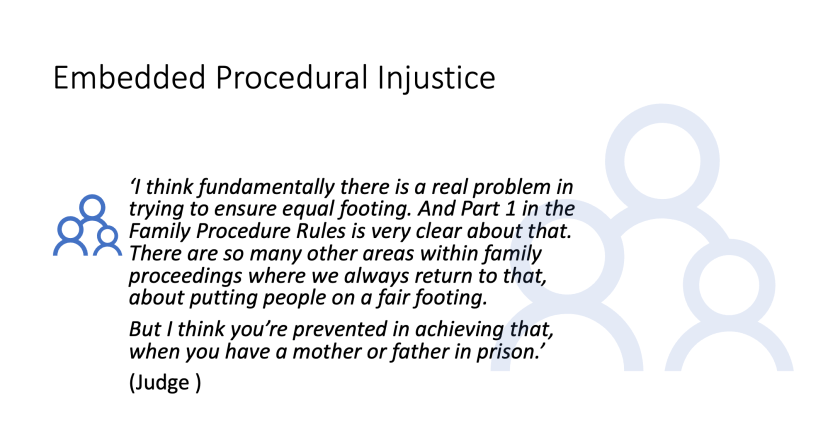
The report provides an in depth analysis of the systemic barriers that hinder imprisoned mothers from participating effectively in family proceedings, thus undermining the principles of fairness and equality that are fundamental to the justice system.
Imprisoned mothers face numerous barriers in participating in family court proceedings, from biases and assumptions to systemic barriers which exist due to the logistical challenges of being held within the prison system.
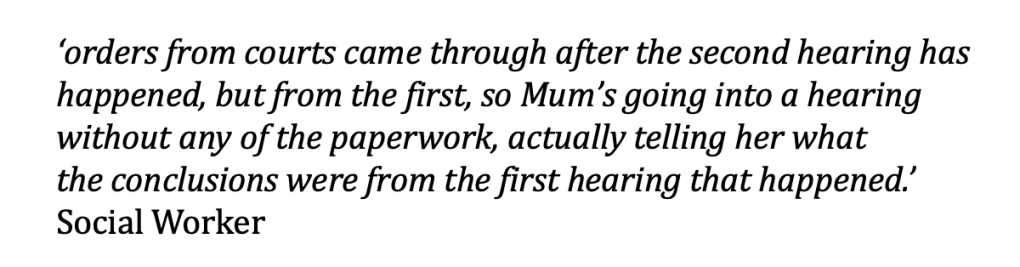
The procedures of the family courts in England and Wales are intended to provide procedural justice, but despite a more recent attempt to ensure equal participation for ‘vulnerable’ litigants, people who are in prison during proceedings do not seem to have been considered when providing for ‘equality of arms’ with regard to participation. Unless the inequalities are addressed, the Article 6 rights of people in prison involved in family proceedings, are not being upheld.

In addition, the full and proper participation of parents in Children Act proceedings is in the best interests of the child, and as the underpinning principle of the Act it is right that it should be reflected in the procedures and practice of the court. Addressing these challenges requires better communication and coordination between the courts, prisons, and support services, as well as a more informed approach to the constraints prison places on mothers.
It is my hope that the information contained in this report will enable social workers, lawyers, judiciary, prison staff and governors, those who set policy for Legal Aid, and those who run court administration, to see the changes they could implement to ensure procedural justice for mothers in prison.
 Dr Shona Minson